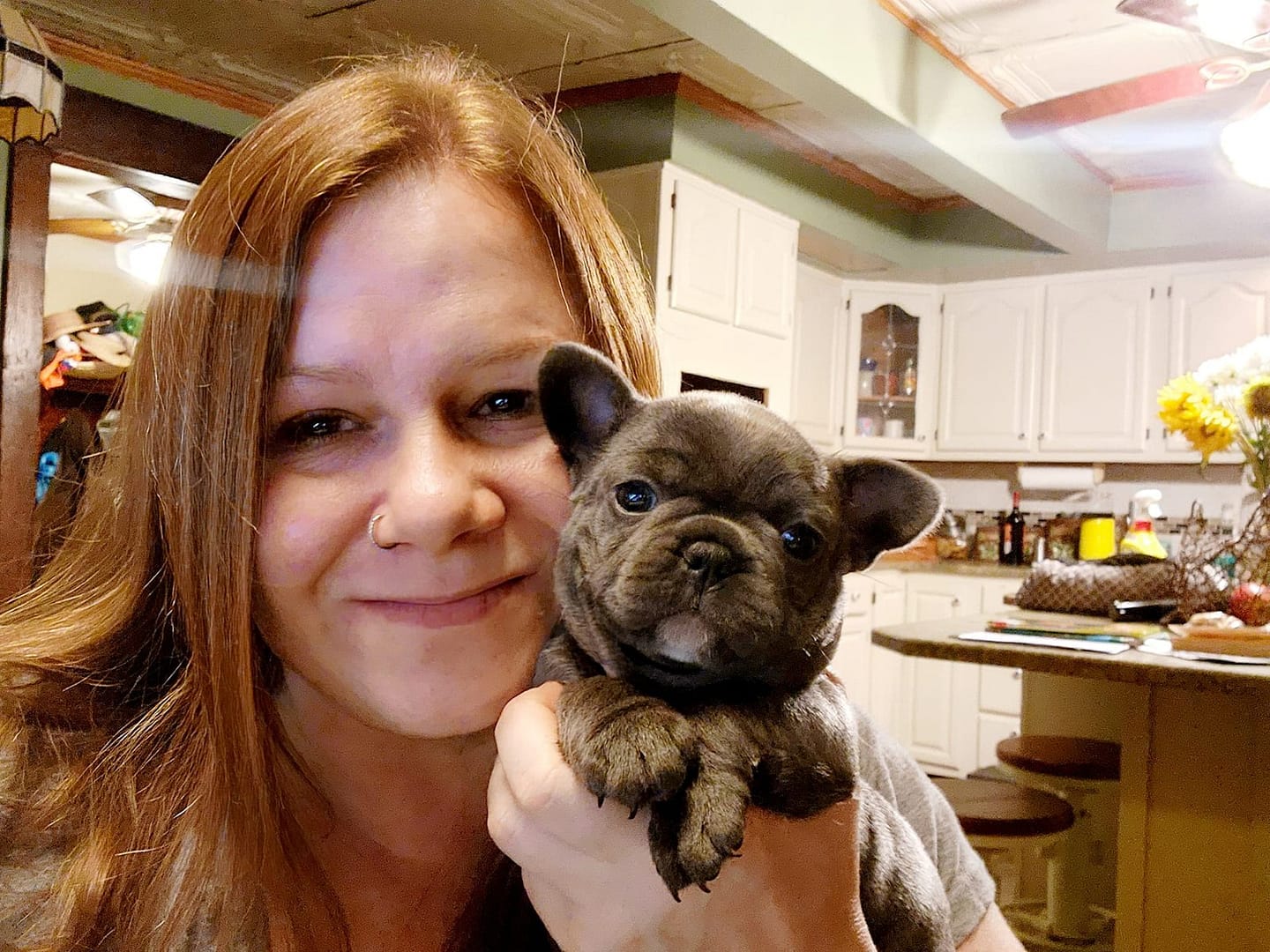
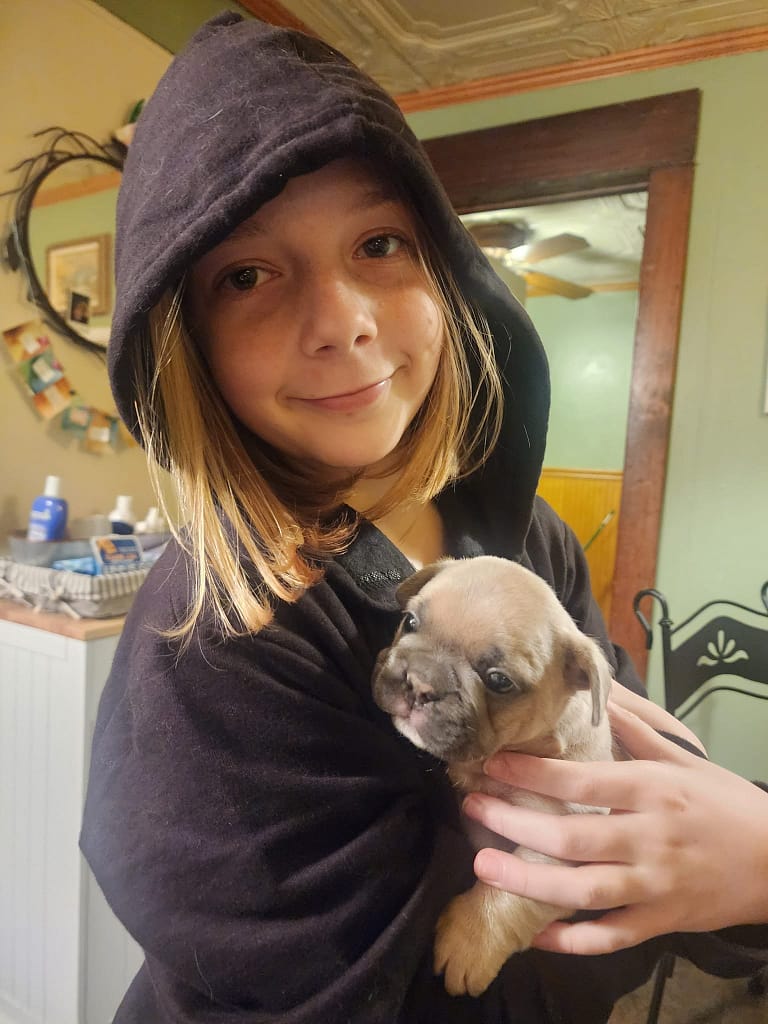
Welcome to Busy Bee Frenchies!
We are a small French Bulldog breeder located in Western Kentucky and have over 20 years’ experience breeding, showing, and raising dogs. While our family has owned French Bulldogs since 2016, and we have been breeding and showing in the years since, that is not where our story begins. Click on the tabs below to learn more.
Where it Began: Cane Corsi
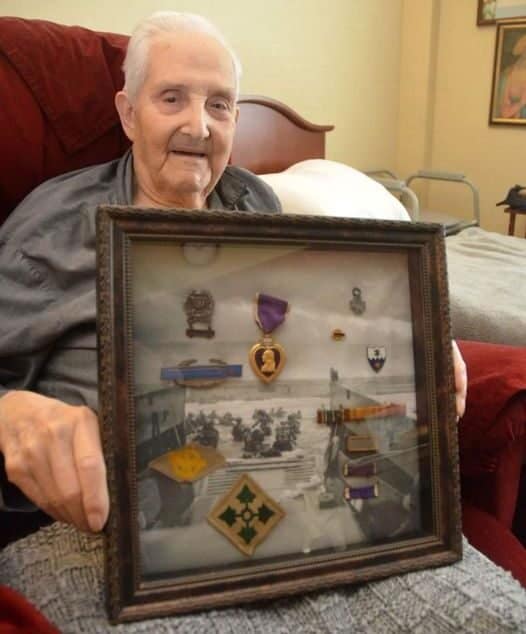
Our family started out raising and breeding the Cane Corso breed because my grandfather, Anthony Tantillo, knew Corsi from when he lived in Sicily. My grandfather came to America became a citizen and served in WWII. He stormed the beaches of Normandy, saving lives. He was one of the oldest WWII survivors passing away at 101 years old. After the war he moved with my grandmother, Clara, to North Augusta, SC where he built a Catholic church with his family because they did not have one yet. His funeral was held at that same church when he passed away.
We loved raising the Cane Corso breed for 19 years, and we met many amazing people worldwide through buying, selling, hunting, showing and championing our dogs. I am still great friends with many of the families that bought puppies from us, and the breeders I met all over the world. We won regional and national awards for our breed with an 18-month-old bitch. We sold a dog to a fishery in Alaska where he smelled out Right Whale Skat to help the whale population. We sold many hunting dogs, we sold puppies that detected seizures and low blood sugar in children, we were published in magazines and books for the breed. We learned so much about dogs in general during those years. We retired from breeding Corsi because our client’s homeowner’s insurance was being cancelled due to owning Corsi. We had to sadly take back and re-home 7 Corsi in 2016 with the families we sold to crying at pick-up. We realized breeding the Cane Corso was no longer a good option for the puppies or the families we placed with. I also did not enjoy working with a lot of the Cane Corso community in the United States by that time. Often my contracts were broken by the breeders who created them. In the last years of breeding Corsi I felt that the breed had taken a tremendous downfall due to 3 written standards being accepted in the USA, the working-class physic was being bred out of the breed, and breeders cared more about winning titles than breeding for health or historically correct conformation. Health was taking a downturn in the USA, and it was becoming harder to import great lines from Europe. Sadly, today I do not see many Corsi that represent what the breed should be historically as they are too large, and their bite has moved to scissor instead of the 1/4 undershot that allows for gripping during hunting.
Why Frenchies?
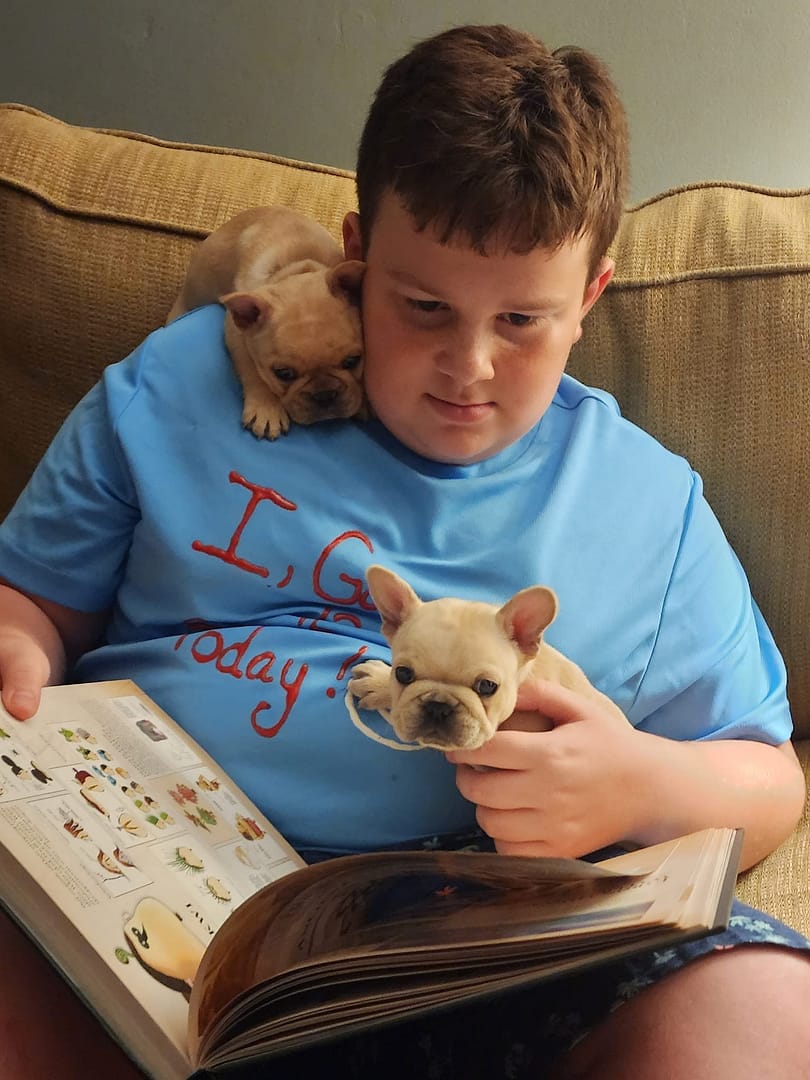
Our son, Gary, led us into French Bulldog ownership. Gary wanted a smaller dog “just his size”, and so my husband and I started searching for a dog that would work. We settled on the French Bulldog because it was so similar to the Cane Corso. Both the French Bulldog and Cane Corso have short coats, love to be with their owner, can be protective, are brachycephalic, and are normally quiet. We brought home Fenton and Gary was thrilled. They ran our farm together and Gary was truly in his element. The rest of us all loved the breed as well!
We added Bumblebee to our family a year later. After my grandfather died, I could no longer breed Corsi. We sat a year or so without breeding and I became agitated. I love breeding dogs because I like the science behind breeding, the people I meet through breeding and the competition in showing. I called Bumblebee’s breeder to see if I could upgrade my contract and she agreed. That was the start of our breeding program and where the name Busy Bee French Bulldogs comes from.
Our Breeding Program
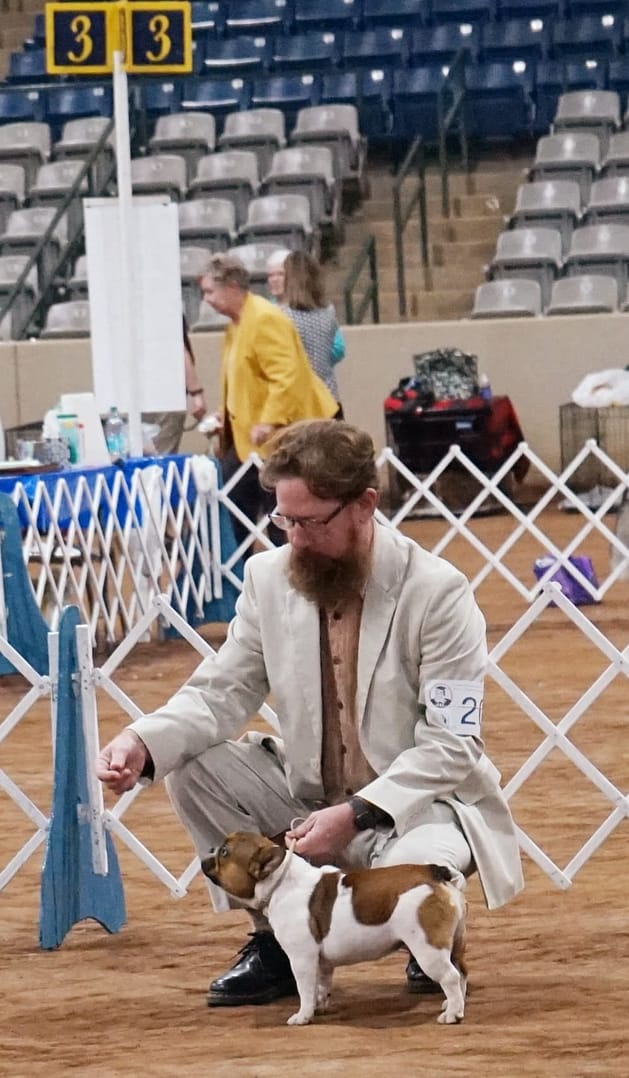
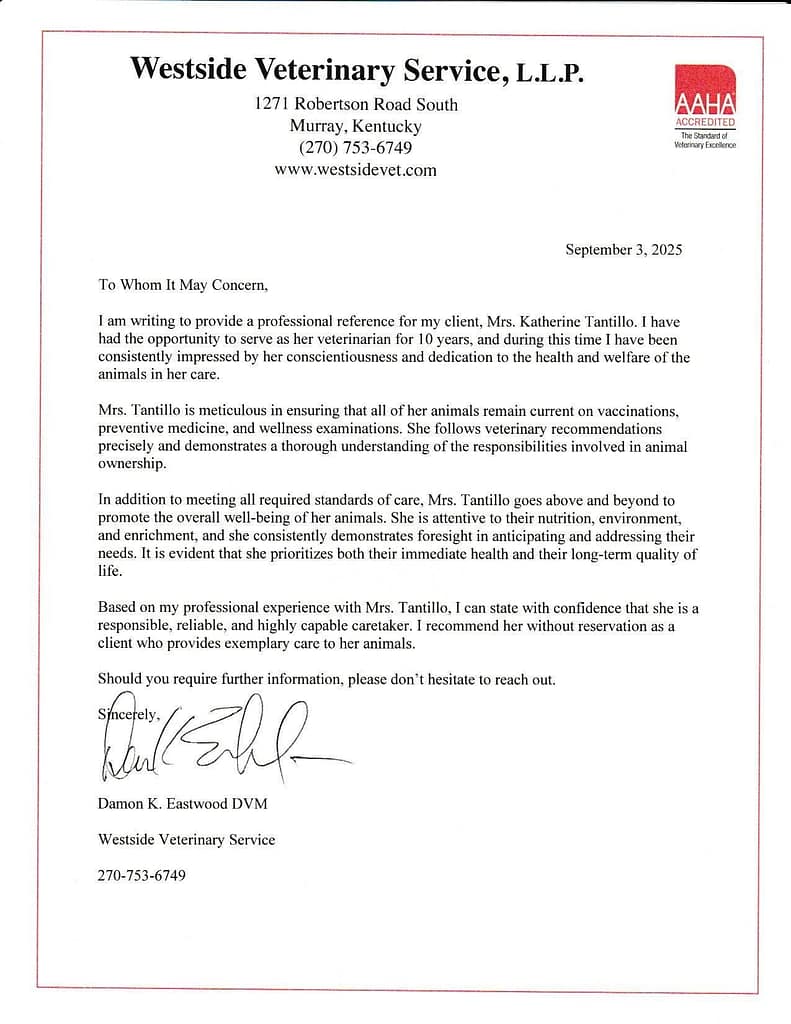
Our family shows in AKC, and both of our children, Gary and Clara, hold junior showmanship numbers. We love spending time with our dogs. We take them kayaking and camping with us. Pretty much, we always have a Frenchie friend in tow, wherever we may go. We love the individual personalities, the quirkiness, and I personally love the challenge this breed offers in creating healthy lines. My veterinarian thought I was nuts, but he knows I am persistent and do diligent research. He said “If anyone can do it, it would be you.” He has helped me assess the health of every dog we bring into our program. I could not do this without a trusted and excellent veterinarian. We health test through Embark and our vet checks their patella’s prior to breeding. Here is a letter of recommendation he wrote us in 2025 after working with him for 9 years.
We take breeding very seriously and we understand you are putting your faith in us to breed you a healthy dog. That is why we like to stay in touch with you as you raise your puppy from us. After all, if we do not keep up with our puppies how can we breed better? The answer is we can not because we will not know if we are actually creating healthy lineage. We have a Facebook page, Busy Bee French Bulldogs, where we can keep up with our families. We love that the families that buy from us can meet one another on this group page, and we can keep up with our puppies easier. Please feel free to join us! We are always open for questions and concerns as well. Thank you for taking the time to visit us here.
Health
Spinal Disorders
IVDD (Intervertebral Disc Disease) This is a genetic condition that affects French Bulldogs where they lose the conditioning in the vertebrae of their spinal cord. In time, if left untreated, it can lead to paralysis. The French Bulldog is bred to have a short back and therefore all truly bred French Bulldogs carry this genetic trait. This means breeders cannot ever breed away from the possibility of IVDD unless we change the physical characteristic of the short- backed French Bulldog. Having IVDD in your French Bulldog’s DNA does not mean they will develop this condition. There is simply a possibility they could develop this condition. I do not know of any breeders that cover this condition because there are no tests available to prevent this condition. Breeders cover what they can test against. Given that IVDD runs in all truly bred French Bulldogs it is a chance you take in choosing to own the breed. To date, we have not had a French Bulldog diagnosed with IVDD.
Hemivertebrae: Malformations of the vertebrae which can lead to paralysis and neurological issues. This is another issue that affects French Bulldogs and it also cannot be tested for prior to breeding, so breeders do not cover it under the health portion of their contract. I will say though corkscrew tails can be a culprit of this genetic disease. There are 3 types of common tails found in the French Bulldog.
- Corkscrew Tail: Small tail that flushes to the body and has no movement. Sometimes appearing as a button on the rear. These tails can lead to what is called a “tail pocket.” Tail pockets allow dirt and bacteria to accumulate which can cause a foul odor and skin infections. The corkscrew tail is formed by tightly twisting the vertebrae at the end of the spinal cord and this is what can be a cause of Hemivertebrae. Sadly, in my AKC show experience many judges give these dogs first place ribbons. So, the likelihood of creating this genetic disease continues. Hemivertebrae is not always affiliated to the tail and so having a veterinarian or two assess the dog is ideal.
- Long Bent Tail: These are tails that are longer than a corkscrew tail and allow for movement away from the rearend. They may bend to the side or look crooked. They are often thought to be corkscrew tail because sometimes they look like a corkscrew, but they are, in fact, not a corkscrew tail. They are not associated with Hemivertebrae and are healthier for the French Bulldog. I personally find them cute and I will happily breed this tail set. AKC, does not, however, approve of this tail set and you would be possibly disqualified from the ring or in last place if you tried to show it in conformation. I personally find this sad considering it is a healthier tail for the breed. This is one example showing how AKC has ruined the breed Healthwise.
- Longer straight tail: This is a longer tail that covers the anus but is straight and not bent. This is the most ideal tail for the French Bulldog but almost impossible to produce given the history of introducing the tighter corkscrew tail. While it is not healthier than the bent tail it is, to most people, the prettier of the longer tail set. Like the bent tail it does not lead to tail pockets or Hemivertebrae.
Breathing Disorders
Stenotic Nare: Closed or pinched nostrils. This genetic deformity can lead to brachycephalic obstructive airway syndrome (BOAS) which prevents the dog from breathing correctly and requires surgical repair. French Bulldogs are bred with a flatter face so this can also be a condition that spreads easily through the breed. There is no genetic testing to prevent this genetic deformity yet. However, breeding away from it is a way breeders can help prevent the spread. Here at Busy Bee, we have never bred a dog with a stenotic nare or the appearance of a stenotic nare. We have bought dogs from other breeders that have had this condition, and we placed the dogs on a pet contract at a discounted price to cover possible surgery. Of course, we let the new owners know ahead of time about the possibility of surgery. We have never had a puppy we have bred come down with this genetic disease, but it could happen even with how careful we are in breeding away from it.
Elongated Soft Pallet: The soft pallet extends too far into the airway blocking air flow. This genetic deformity requires surgery to correct. The surgery in this condition is more extensive and costly than a stenotic nare surgery. There is also not a genetic test for this condition. It can be bred away from like the stenotic nare. We have never bred a dog with a soft pallet or purchased one with a soft pallet. We take breathing very seriously here at Busy Bee French Bulldogs.